
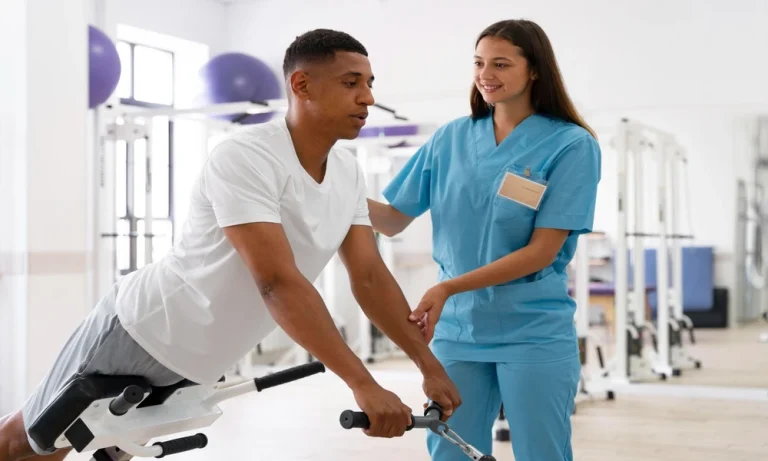
Surgery is a controlled trauma that repairs structural damage but simultaneously triggers protective mechanisms, which cause tissue stiffness and muscle deactivation. Achieving a successful outcome requires active intervention beyond the procedure itself. Structured post-surgical physiotherapy is essential to manage these responses and prevent a recovery process that is otherwise slow, painful, or incomplete.
The Critical First Phase of Recovery
The weeks immediately following surgery are vital. It’s a delicate balancing act between protecting the surgical site and preventing the rest of your body from becoming deconditioned. Why is moving so soon after surgery so important?
- Circulation and Oedema – Movement helps the lymphatic system clear swelling and pooling fluids around the wound.
- Preventing DVT – Early, gentle movement (like ankle pumps) is crucial for preventing deep vein thrombosis.
- Neuromuscular Activation – Surgery often shuts down the communication between your brain and your muscles; we need to wake them up.
Overcoming the Fear of Movement
One of the biggest hurdles in post-op physiotherapy is psychological. Many patients are terrified that moving will break the surgery. Have you found yourself holding your breath every time you try to stand up or reach for something?
- Graduated Loading – We provide a roadmap of exactly how much weight you can put on the limb each week.
- Education on Pain – Not all pain is bad. We help you distinguish between healing pain and warning pain.
- Safe Environment – Performing your first post-surgical movements under the eye of a professional gives you the confidence to do them at home.
The Role of Scar Tissue Management
Scar tissue is your body’s biological glue, but it can be a double-edged sword. If it’s allowed to grow unchecked, it can tether muscles and joints together, leading to permanent stiffness. Did you know that post-surgical physiotherapy includes specific techniques to keep your scars mobile?
- Manual Desensitisation – Helping the nervous system get used to touch around the incision site.
- Tissue Mobilisation – Ensuring the skin and underlying fascia move freely over the muscle.
- Range of Motion Exercises – Stretching the tissue while it is still plastic and adaptable.
Life Beyond the Clinic: Getting Back to Your Rhythm
The final goal of post-op physiotherapy is to live. This means being able to carry groceries, play with your children, or return to your Saturday morning run. How do we ensure you’re actually ready for the real world?
- Functional Testing – We use specific benchmarks to ensure your strength is symmetrical and stable.
- Task-Specific Training – If your job involves heavy lifting or long periods of standing, your rehab will mimic those demands.
- Long-term Maintenance – We provide you with the tools to keep the joint healthy for years to come, preventing the need for revision surgeries.
Investing in Your Lasting Recovery
Surgery provides the foundation, but physiotherapy builds the house. By committing to a structured recovery plan, you ensure that the time, money, and effort spent on your surgery actually result in a better quality of life. Don’t leave your recovery to chance.
Frequently Asked Questions
When should I start physiotherapy after surgery?
In many cases, gentle exercises start within 24-48 hours. However, formal outpatient physiotherapy usually begins 1-2 weeks post-op, depending on your surgeon’s protocol.
Will post-surgical physiotherapy be painful?
There is often some discomfort involved in restoring movement, but it should never be excruciating. We work within your tolerance to ensure progress without unnecessary suffering.
What happens if I skip my post-op exercises?
Skipping rehab increases the risk of joint stiffness (contractures), muscle wasting, and potentially the failure of the surgical repair itself.
How long does the full recovery process take?
It depends on the surgery. A simple arthroscopy might take 6 weeks, while a major reconstruction could take 6-12 months to reach full athletic capacity.
Contact The Movement Laboratory to schedule your post-op physiotherapy assessment.