
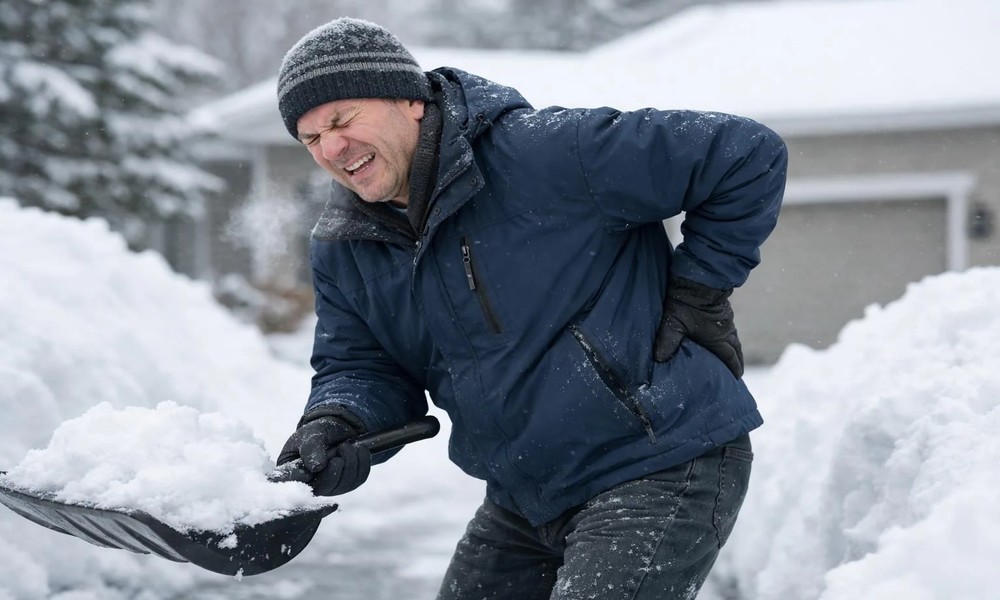
Winter in the south metro has a rhythm. The first heavy snow shows up, driveways need clearing, the rinks open, and a week later the office at Dakota Chiropractic in Apple Valley starts seeing the same injuries on repeat. Sore lower backs from shoveling. Stiff necks from a fall on the ice. Hockey players favoring one hip after a hard check into the boards. Dr. Hannah Steinmetz sees this pattern every November through March, and most of it is preventable.
Knowing what tends to go wrong, and how to handle the early warning signs, is the difference between a stiff Saturday and six weeks of missed workouts.
The Shoveling Injury Almost Everyone Underestimates
A driveway clearing session in Apple Valley after a six-inch snowfall is a serious workout. The average shovel of wet snow weighs around fifteen to twenty pounds. Move that load three hundred times in an hour, in the cold, with a bent spine and a twist at the end of each scoop, and the math gets ugly fast.
The injuries we see most often are not dramatic. They are accumulation injuries. The lower back muscles spasm a few hours after the work is done, or the next morning. A disc that was already a little irritated finally tips over the edge. The pain feels disproportionate to the activity because the body was loading the spine wrong all afternoon.
A few small changes prevent most of it:
- Push the snow rather than lift it whenever possible
- When you do lift, bend the knees and keep the load close to the body
- Switch which hand is on top of the shaft every few minutes
- Never twist while throwing snow off to the side, pivot the whole body
- Take breaks every fifteen or twenty minutes, especially when the snow is wet
- Warm up the body before going outside, even just two minutes of walking in place
Choosing the right shovel matters too. A bent-shaft shovel reduces the depth of the bend at the lower back, and a smaller blade slows you down in a way that actually helps.
Hockey, Skiing, and the Other Winter Sports That Fill the Schedule
Apple Valley and the surrounding suburbs run on youth and adult hockey from October through March. Skiing and snowboarding pull people up to Welch Village and Afton Alps every weekend. Curling leagues are growing. Each sport puts a specific kind of load on the body, and each one shows up in the office in its own way.
Hockey players come in with hip and lower back complaints from the asymmetric skating stride, neck issues from impacts, and shoulder strain from one-sided shooting. Skiers and snowboarders see knees, hips, and lower backs after a long day, especially when the snow is heavy. Curlers, of all people, end up with neck and lower back issues from the sustained lean and the sweeping motion.
The common thread is that almost none of these athletes warm up properly before going out. Cold muscle plus repetitive motion plus impact equals injuries that build slowly until something gives.
Falls on the Ice
A fall on a sidewalk in January is one of the most common reasons new patients call. The body braces in the half-second before impact, every muscle from the neck to the lower back tightens, and even a small landing can leave joints out of position for weeks afterward. Hip falls often refer pain into the lower back. Falls onto an outstretched arm send force up into the shoulder, neck, and upper spine.
The mistake most people make is waiting. The bruise fades in a few days and they assume the injury is gone. The underlying joint dysfunction stays in place and gradually pulls posture and movement off center. A month later they are dealing with headaches or sciatica and have forgotten about the fall entirely.
When Soreness Is Normal and When to Come In
A day of muscle soreness after heavy shoveling or a long ski day is expected and resolves on its own. The signs that point toward something more than ordinary soreness:
- Pain that wakes you up at night
- Sharp pain that shoots into the leg or the arm
- Numbness or tingling in the hands or feet
- A back that locks up to the point you cannot stand up straight
- Soreness that has not improved at all after three or four days
- A headache that started within twenty-four hours of a fall
Any of those deserve a phone call. Catching a winter injury at day three rather than day thirty usually shortens the recovery from weeks to days.
Stretches Worth Doing Before You Pick Up the Shovel
Three short movements take the edge off most shoveling and skating injuries. They take less than five minutes combined.
The first is a standing cat-cow. Hands on the thighs, arch and round the lower back ten times. This wakes up the lumbar spine before any load goes through it.
The second is a hip circle. Stand on one leg, lift the other knee toward the chest, then circle the lifted knee outward and back down. Ten on each side. This loosens the hip joints that take the brunt of skating and uneven shoveling.
The third is a doorway chest stretch. Place a forearm on each side of a doorframe and step gently forward. Hold for thirty seconds. Tight chest muscles are the single biggest reason shovelers end up with neck and upper back pain by the end of the driveway.
A Better Way Through the Minnesota Winter
Winter in the Twin Cities is long enough that small injuries have plenty of time to turn into chronic problems if no one addresses them. The team at Dakota Chiropractic in Apple Valley sees the same set of injuries every season and knows how to sort the cases that need a few adjustments from the ones that need imaging or a referral. If something has been off since the last storm, the last hockey practice, or the last fall on the ice, schedule a visit before the next snow makes it worse.

Comments are closed.